


Introduction
LEARN MORE
Our vision for Christian education is to form students who become more like Christ, serving others and discovering their calling in God’s world. We seek to develop the whole child with the skills and faith needed for lifelong growth and transformation.
Our Deep Hope for Our Learning Community
At Langley Christian School, our Bible curriculum from Kindergarten through Grade 12 is designed to help students know God, care for others, and live with purpose.
Our deep hope is that our school feels like the kind of community God intended from the beginning – where relationships are strong, learning is meaningful, students are free to explore, everyone’s gifts are celebrated, and we grow together.
We want to nurture the whole child – mind, heart, body, and spirit – so that our graduates are prepared not only for future studies and work, but also for lives of faith, service, and character. We look to Jesus as our model of what it means to be both a teacher and a learner, and we believe this vision of education brings hope and value not only to individual students but to the wider world.
Together, we see education as part of God’s ongoing work to bring renewal and goodness into the world, and we are grateful to partner with families in this important calling.
GOALS & RATIONALE
LEARN MORE
The LCS K-12 Biblical Studies curriculum is what makes an LCS education distinctive from other schools. We are more than a school with skilled Christian teachers who teach a BC curriculum.
Biblical Studies K-12 is taught as a stand-alone subject, but the learning goals and content are also fully integrated into all other subjects and extra-curricular programming.
FORMATIVE PRACTICES
LEARN MORE
Our K-12 Biblical Studies teaching framework is about designing learning experiences that invite students to engage in dynamic and experiential learning.
We design and facilitate discussions about the world in light of the Biblical narrative. Christian teaching is a process of learning how faith informs how we live and learn together.
Guidelines for teachers and parents: FORMATIONAL CHRISTIAN TEACHING PRACTICES
How do we teach? LCS INSTRUCTIONAL GUIDELINES
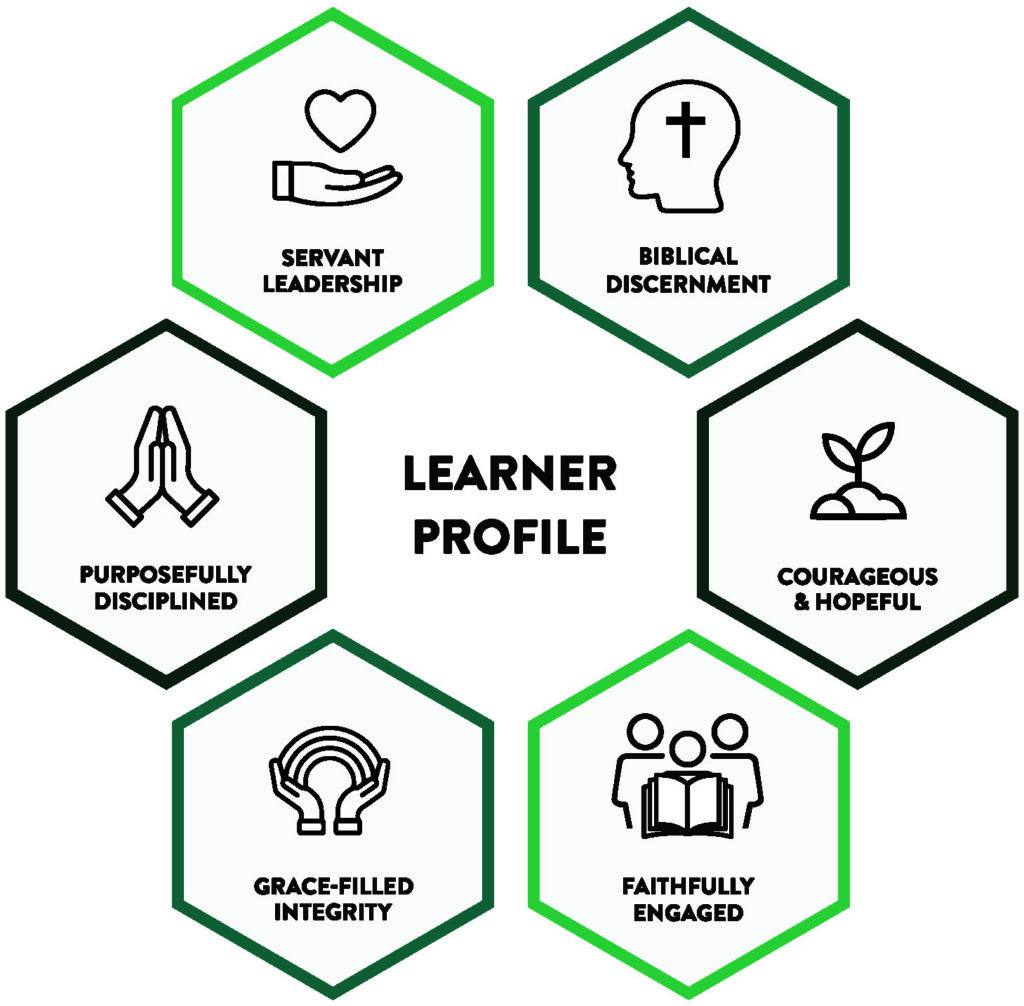
Our K-12 Biblical Studies curriculum aims to foster the development of each of the 6 Learner Attributes that describe what we strive to develop in all learners.
BIBLICAL DISCERNMENT
Faith-informed ethical decision making and problem-solving
The learner applies knowledge of God and Biblical perspectives to evaluate truth claims and to make reasoned, informed judgements or decisions about important questions or ethical dilemmas in our culture. Learners develop awareness of biases and prejudicial reactions when examining different thinking fallacies, ways of knowing, and sources of knowledge. They explore, uncover and evaluate diverse perspectives through a Biblical lens. (Acts 17:11; 1 Cor 6:12; Rom 12:2)
SERVANT LEADERSHIP
Local & Global Kingdom service
The learner is equipped and discipled to actively serve others, and model stewardship and service as an ambassador of Christ. The learner engages in contributing to and making an impact in one’s community. Students are collaborative problem solvers and community builders who take responsibility for themselves and others, and who care for and steward God’s creation. Students are able to imagine and implement actions that promote ongoing restoration. (2 Cor 5:20; Gal 5:13; Eph 2:19)
FAITHFULLY ENGAGED
Striving for Shalom and reconciliation
The learner is encouraged to develop a Christ-like compassion, hospitality, and awareness of real-world problems, globally and locally. The learner embraces the diversity of others as part of God’s design for the world. The learner is invited to be a peace-maker and change agent who seeks to learn from and understand others’ narratives, and engage in recognizing our part in God’s redemptive plan. Learners strive for opportunities to partner with the Spirit’s work in reconciliation, restoration and justice. (Micah 6:8; Phil 2:3-5)
COURAGEOUS & HOPEFUL
Courage, connection-making and appreciation for Creation
The learner is invited to thrive in discovering patterns, and uncovering the beauty, truth and wonder in God’s design for creation. The learner embodies hope and joy through thoughtfully inquiring about the presence of God in all things and examining their own beliefs about the world. They demonstrate courage by relying on what they do know and observe, to trust faithfully in the unseen. Learners are curious, reflective and open-minded risk takers who develop a sense of achievement, resilience and independence in their thinking. (Psalm 104:24; Ecc 3:11)
PURPOSEFULLY DISCIPLINED
Identities and relationship with God, Self and Others
The learner grows in understanding and confidence of who God created them to be. The learner is invited into a worshipping community, encouraged to identify and develop a sense of purpose, and are discipled to live a life modeled on the character of Christ. Learners participate in and cultivate personal and corporate practices and habits that are transformative and promote a life of wholeness, wellbeing and worship. (Jer 29:11; 2 Tim 1:7; Mark 12: 28-32)
GRACE-FILLED INTEGRITY
Relationships based on Grace and Humility
The learner develops effective verbal and non-verbal communication that characterizes integrity, grace, love and empathy for others. The learner is equipped to develop authentic listening, communication and conflict resolution skills that invite positive relationships through understanding, cooperation, and valuing and loving others as image bearers. Learners share, evaluate, and present themselves in a way that is honourable, respectful, and honest. (Col 4:6; Eph 4:29)
Know God.
Love Others.
Live Purposefully.
THE LCS LEARNER PROFILE
GUIDANCE DOCUMENTS
- CURRICULAR POSITION STATEMENTS
- 2001 LCS CURRICULUM POLICY
- INSTRUCTIONAL GUIDELINES
- K-12 CURRICULUM MAP
- CURRICULUM IMPLEMENTATION PLAN
- BIBLICAL LITERACY
- TEACHING CONTROVERSIES
- SERVICE LEARNING
- CROSS-CURRICULAR GUIDANCE (TBD)
- EXTRA-CURRICULAR GUIDANCE (TBD)
Elementary
The LCS Curriculum Video Series
COPYRIGHT © THE LANGLEY CHRISTIAN K-12 BIBLE CURRICULUM, 1203339, ALL RIGHTS RESERVED